
In public
- Keep phone calls off trains and conversation quiet in carriages.
- Queue where the platform markings tell you to.
- Follow local signs about eating; at busy food stalls, use the designated area rather than blocking the street.
Eating and drinking
- Wait until everyone is served before starting.
- Don't stick chopsticks upright in rice or pass food chopstick to chopstick.
- Tipping is not practised and can cause genuine awkwardness.
Shoes and interiors
A step up, a change of flooring or a rack of slippers all mean the same thing: shoes off. This applies in homes, ryokan, many temples and some restaurants.
Onsen and public baths
Wash thoroughly before entering the shared water and keep towels out of it. Traditional communal baths generally require bathing without swimwear; follow the facility's instructions. Tattoo policies vary, including for private or room baths: confirm the particular property's rules before booking.
Temples, shrines and photography
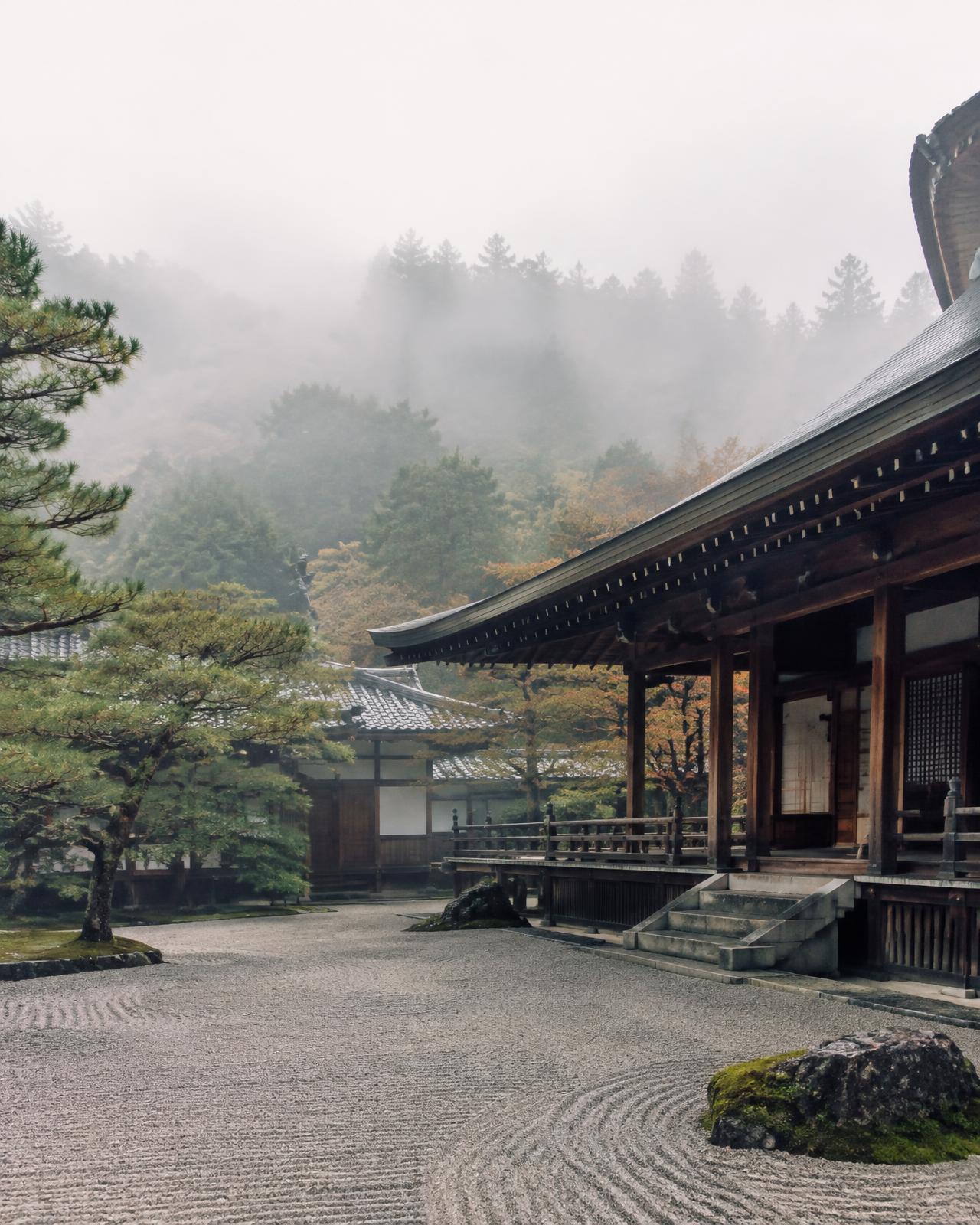
Treat a place of worship as a working religious site, not just a backdrop. Follow signs about shoes, photography and closed areas; permission outside does not imply permission inside a hall. Keep entrances clear and ask before photographing people. You do not need to imitate a ritual you do not understand: observing quietly is fine.
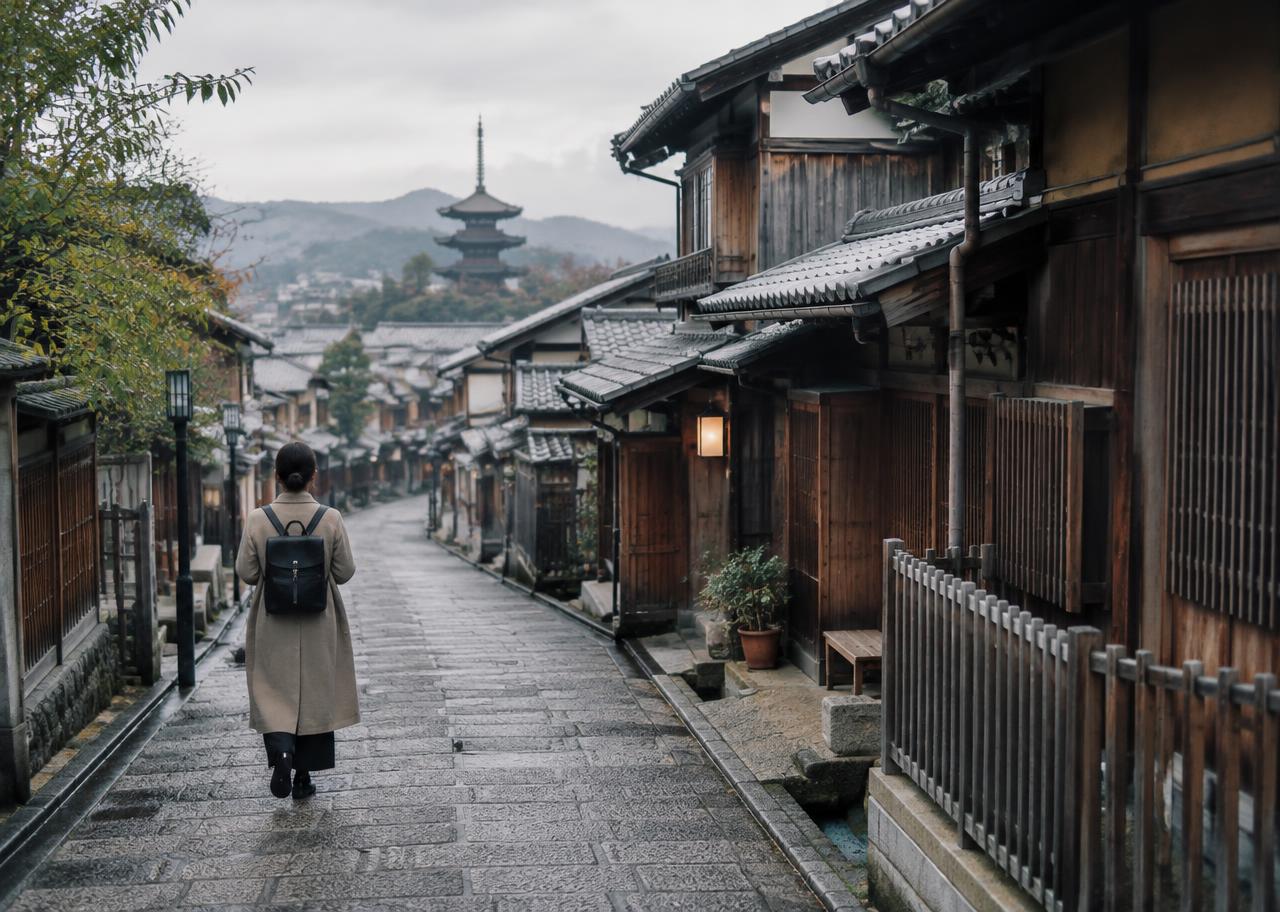
When planning a day in Kyoto, leave enough time to read local instructions. A busy street, a temple garden and a residential lane can have different expectations even within the same neighbourhood.
Rubbish, food and shared space
Carry a small bag for your rubbish until you find an appropriate bin. Follow sorting labels and do not leave packaging beside a full bin or use a household collection point. At food stalls, ask where to eat and return packaging if the vendor provides that service. Eating rules vary between ordinary commuter trains and longer-distance services; follow the setting rather than treating every train alike.
Everyday interactions and payments
- Let passengers leave before boarding, keep luggage out of doorways and follow platform queue markings.
- A greeting, a thank-you and a patient request are more useful than performing exaggerated gestures. Ask before using a translation app or taking a photograph.
- Where a payment tray is provided, use it rather than reaching across the counter. Ask which payment methods are accepted; do not assume every small shop takes cards.
- At restaurants, follow the host's seating instructions and tell staff promptly if your party changes or you cannot attend a reservation.
For cash, cards and withdrawals, use our separate money and payments guide. Keep this page for manners rather than financial planning.
Small mistakes are usually easy to put right
Pause, apologise briefly and follow the instruction you are given. Do not turn customs into a test of whether you are a good traveller. Local signs and the person managing the space take precedence over a general guide, particularly around bathing, photography and footwear.
Etiquette questions before a first visit
Does a private bath automatically allow tattoos?
No general guide can guarantee admission. Ask the individual property about tattoos and the specific private or communal bath before booking. A private bath may be a useful option, but its conditions still need checking.
How do I know when to remove shoes?
Look for signs, shoe racks and a raised entrance, then check with staff if unsure. Follow separate instructions for slippers and tatami; do not carry outdoor footwear onto an area reserved for bare feet or socks.
What should I check before using an onsen?
Confirm admission rules, towels and whether a bath is communal or private. Wash before soaking, keep towels and hair out of the water, and respect privacy. Our nature and onsen escapes help you choose where this experience fits in the trip.