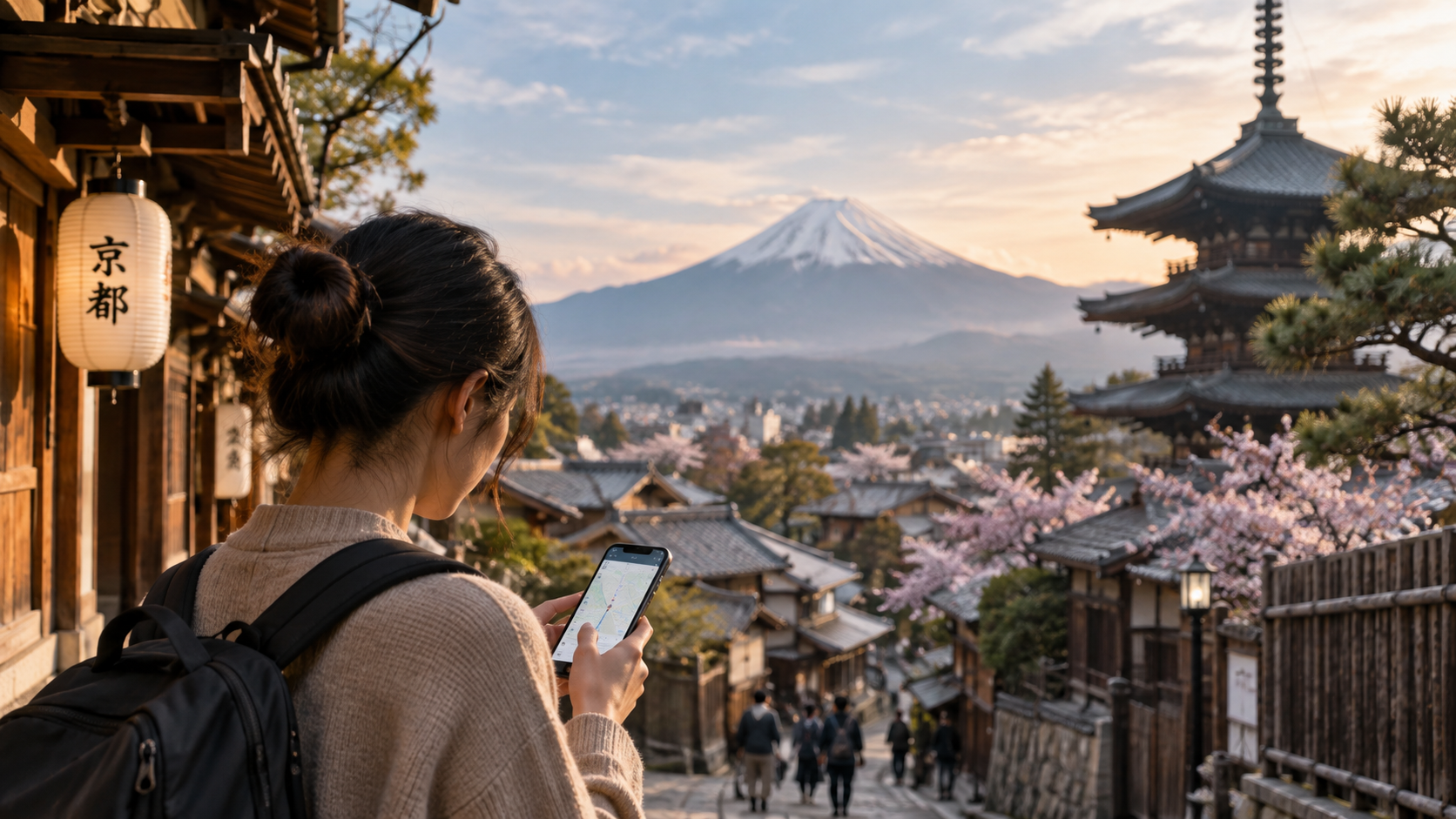
For most tourists in Japan in 2026, an eSIM is the most convenient way to stay connected, especially for short visits. However, not all devices support eSIMs, and not all eSIM plans are alike. Check your device compatibility and data needs before you travel, and be aware of the differences between eSIMs, physical SIMs, and pocket Wi-Fi.
What surprises first-time visitors
The main surprise for many first-time visitors is that, despite Japan’s advanced technology reputation, free public Wi-Fi is not as widespread or reliable as expected. While some stations and major tourist areas offer Wi-Fi, coverage can be patchy, and registration processes may be inconvenient or require Japanese-language navigation. This makes having your own mobile data connection—via eSIM, SIM, or pocket Wi-Fi—much more important than it might be elsewhere.
Another point that often catches travellers off guard is that not all foreign devices are compatible with Japanese mobile networks, especially when it comes to eSIMs. Device compatibility and SIM unlocking status are essential to check before leaving home.
Some eSIMs for tourists in Japan are data-only and do not provide a Japanese phone number. While this is sufficient for maps, messaging, and most travel apps, it means you cannot make traditional voice calls or receive SMS messages on a Japanese number. However, voice calls via apps (like WhatsApp or Skype) are possible.
Before you leave home
- 01**Check your device**Confirm that your phone is eSIM-compatible, SIM-unlocked, and supports Japanese networks. Not all eSIM-capable phones from outside Japan are unlocked for use with Japanese eSIM providers.
- 02**Compare eSIM and other options**Decide whether an eSIM, physical SIM, or pocket Wi-Fi best suits your needs. For most short-term visitors, eSIMs and pocket Wi-Fi are the most convenient options, according to the Japan National Tourism Organization (JNTO).
- 03**Purchase in advance**Many eSIM providers recommend purchasing and installing your eSIM a few days before your departure. This ensures you have the QR code and instructions ready, and can activate the plan as soon as you land.
- 04**Plan for data-only**Most tourist eSIMs in Japan are data-only. If you need voice calls or SMS, check specifically whether your chosen plan supports these features.
On the ground
Once you arrive in Japan, you can activate your eSIM immediately if you have already installed it. If you need help, airport service counters and electronics stores in major cities can assist with SIM and eSIM setup, but staff may not always speak English fluently.
If you did not arrange an eSIM in advance, you can still purchase one online or at certain airport kiosks, though selection and support may be limited compared to buying ahead.
- Some eSIM plans can be delivered instantly by email after purchase, allowing you to get connected within minutes.
- If you purchased a physical SIM or pocket Wi-Fi, these are available at airport counters and electronics retailers, but availability can vary by airport and time of arrival.
For those who prefer physical SIMs, be sure to select the correct size for your device (nano, micro, or standard) and follow the provider’s network setup instructions. For eSIMs, ensure you have Wi-Fi access to complete the installation process if it is not already activated.
Etiquette that actually matters
- Don’t rely on public Wi-Fi for sensitive transactions: Free Wi-Fi is convenient for quick checks but not recommended for banking or private communications due to security concerns.
- Use headphones for calls: If you make voice or video calls in public places, use headphones and keep your voice down, as loud phone conversations are frowned upon in trains and quiet public spaces.
- Avoid using phones in certain train carriages: Some train carriages, especially reserved or women-only cars, may request that phones are kept on silent and not used for calls.
Mistakes worth avoiding
- 01**Assuming all devices work**Not all international phones support Japanese eSIMs or networks. Double-check compatibility and unlocking status before you travel.
- 02**Leaving it too late**Waiting until you arrive in Japan to purchase an eSIM can mean fewer options and higher prices. Buy and install your eSIM before departure when possible.
- 03**Ignoring data limits**Some plans offer daily or monthly data caps. For example, NTT Communications offers a 7-day prepaid SIM with 100 MB per day. Heavy data users should check limits and consider unlimited or higher-capacity plans.
- 04**Not configuring settings**Some travellers forget to update APN settings, resulting in no data connectivity after arrival. Follow your provider’s setup instructions carefully.
- 05**Forgetting about SMS/voice**Data-only eSIMs do not support SMS or traditional voice calls. If you need these, research alternative solutions before committing.
FAQ
Can I get an eSIM for Japan as a tourist?
Yes, eSIMs are widely available for tourists, with many providers offering plans that can be purchased and activated online before arrival.
Do I need to unlock my phone to use a Japanese eSIM?
Yes, your device must be SIM-unlocked and eSIM-compatible to use a Japanese eSIM.
Are eSIMs in Japan data-only or do they include a phone number?
Most tourist eSIMs are data-only and do not provide a Japanese phone number. Voice calls via apps are possible.
Where can I buy a Japan eSIM?
You can purchase a Japan eSIM online before your trip, or at certain airport counters and electronics stores after arrival. Advance purchase is recommended for best selection and convenience.
What are the alternatives to eSIMs for staying connected in Japan?
Alternatives include physical SIM cards (available at airports and electronics stores) and pocket Wi-Fi routers (rented online or at the airport). Each option has different pros and cons for speed, device sharing, and cost.
What data limits should I expect on tourist eSIMs?
Plans vary. For example, NTT Communications offers a 7-day prepaid SIM with 100 MB of data per day. Other providers may offer higher or unlimited data packages—always check the plan details before purchase.
Do I need to configure network settings myself?
Yes, after installing your eSIM or SIM, you may need to manually enter APN (Access Point Name) settings as instructed by your provider.
What you need to decide before buying
- Is your device eSIM-compatible and unlocked for use in Japan?
- How much data will you need per day? Will you require more than a basic cap (such as 100 MB per day), or is light usage sufficient?
- Do you need traditional voice/SMS, or is data-only enough?
- Would a pocket Wi-Fi or physical SIM be a better fit for your travel style or group?
Where the evidence runs out
No official, current eSIM plan prices, unlimited data plan details, or comprehensive coverage maps are available in the evidence above. Individual plan costs, data allowances, and network support must be checked directly with your chosen provider before purchase. No calculation of cost savings between eSIM, physical SIM, and pocket Wi-Fi options can be made from the evidence available.