
Ramen is a family of regional dishes, not a single one. Learn three broths and most menus in Japan stop being a guess.
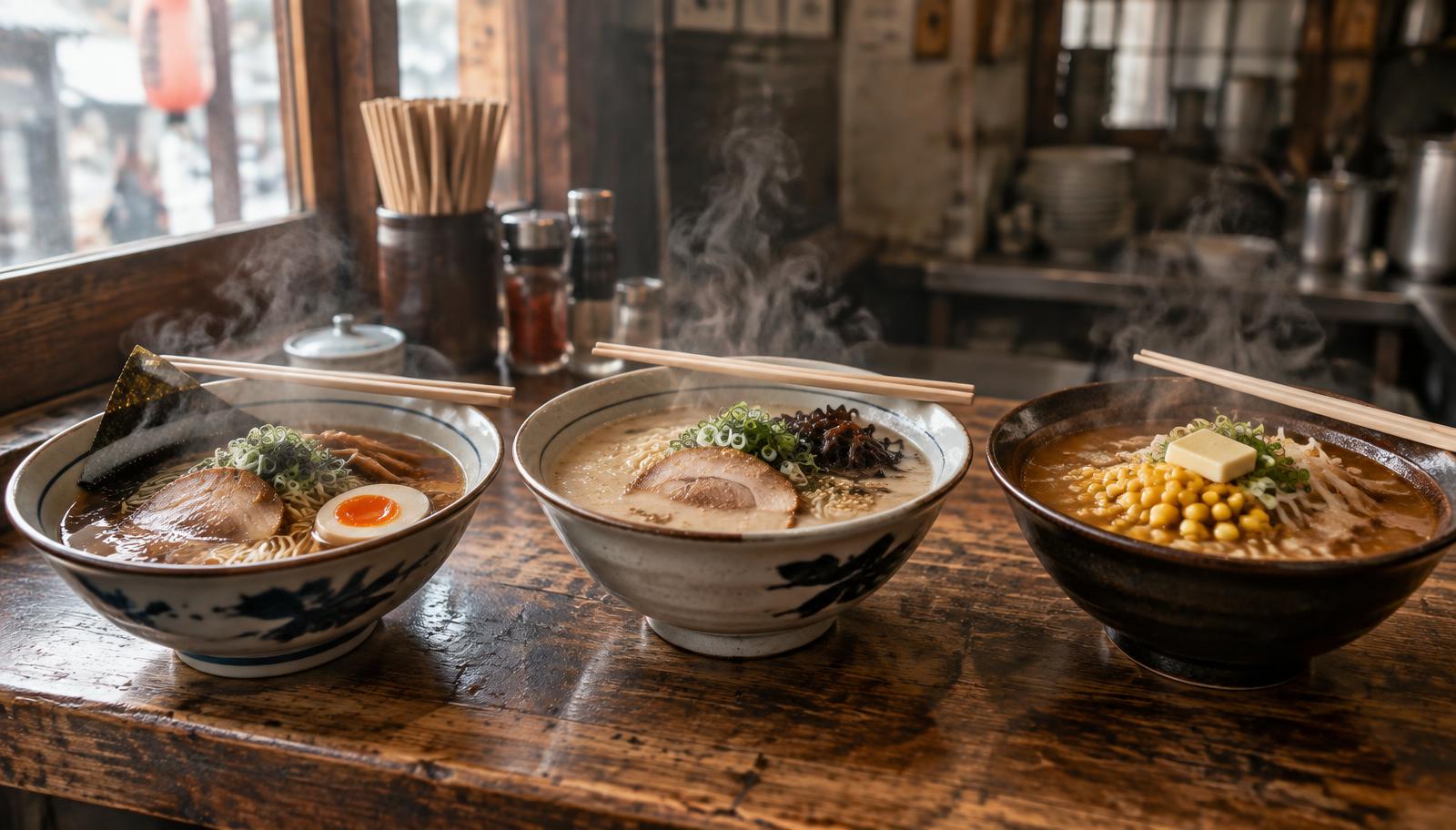
A ramen shop menu rarely explains itself. The useful shortcut is the broth: almost every bowl you meet in Japan is built on soy sauce, pork bone or miso, and each one behaves differently at the counter.
Shoyu — the clear soy-based classic
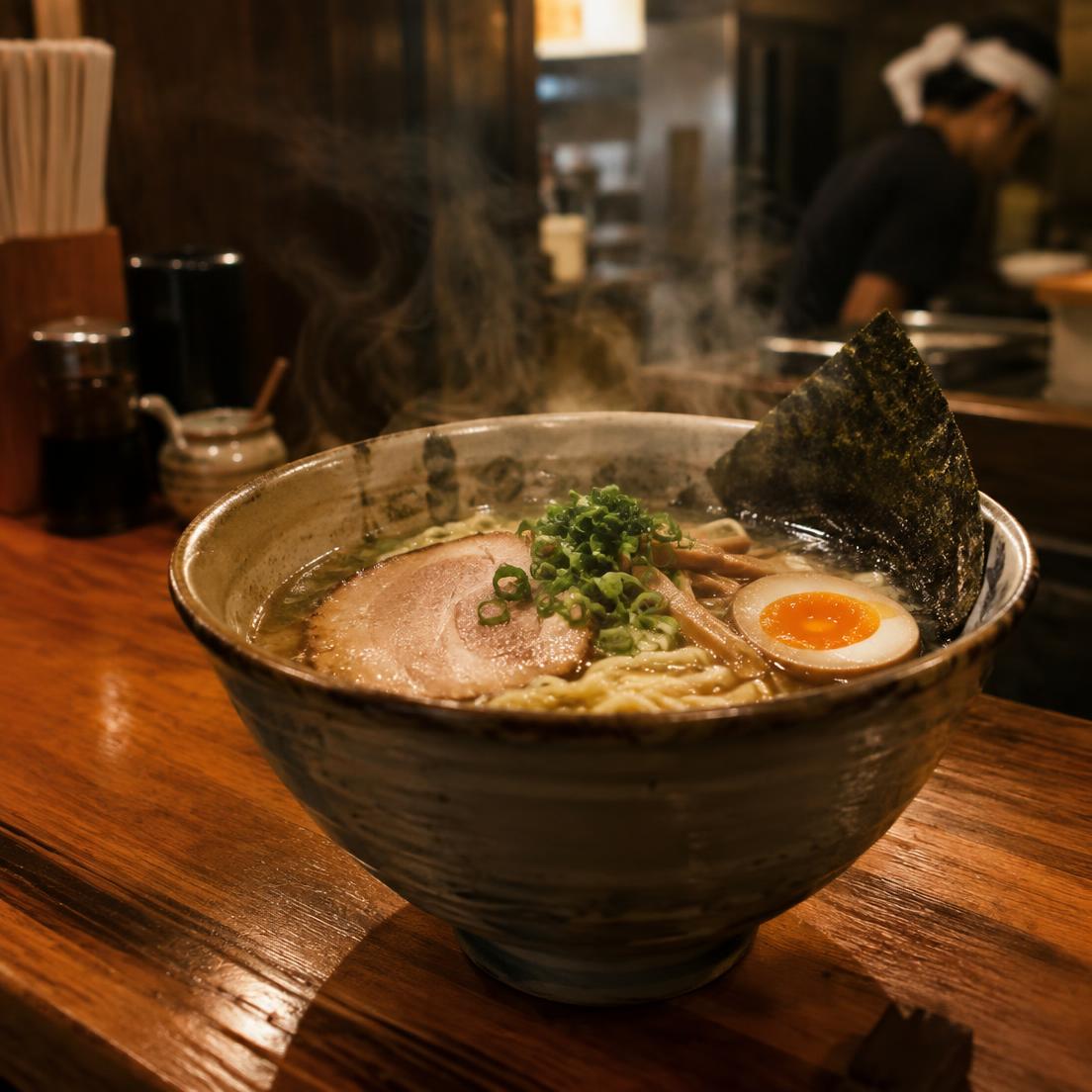
Shoyu ramen is the Tokyo standard: a clear brown broth seasoned with soy sauce, usually over a chicken or chicken-and-dashi base. It is light enough to drink to the bottom, and the flavour comes from the seasoning rather than from fat.
Expect thin, slightly curly noodles, a slice or two of chashu pork, spring onion, menma bamboo shoots and often a sheet of nori. If you have no idea what to order, this is the safe first bowl.
Tonkotsu — the rich pork-bone broth
Tonkotsu comes from Kyushu, and Fukuoka is its home. Pork bones are boiled hard for hours until the broth turns opaque and creamy. It is the richest of the three and the one people either love immediately or find heavy.
The noodles are typically thin and straight, and many shops ask how firm you want them — kata means firm, futsu normal. A second helping of noodles, kaedama, is often available for a small extra charge while you still have broth left.
Miso — the northern bowl
Miso ramen was developed in Sapporo and suits the climate it came from: fermented soybean paste stirred into the broth, thicker noodles, and toppings like sweetcorn, bean sprouts, stir-fried vegetables and sometimes a pat of butter.
It is the sweetest and most savoury of the three, and the one that holds up best on a cold day.
Ordering without hesitating
- Many shops take the order at a vending machine by the door — pay first, hand the ticket to the counter.
- The top-left button is usually the house bowl.
- Toppings are bought as separate tickets: extra pork, an egg, more noodles.
- Cash is still the norm in older shops.
Beyond the three
Two more names appear constantly. Shio is a salt-seasoned broth, usually the lightest on the menu. Tsukemen serves cold noodles and concentrated broth separately, for dipping — excellent in summer, and a different experience rather than a fourth style.